Engineering cloud-connected care intercoms that caregivers and patients can actually rely on
Client: De Heer Medicom
Industry: MedTech / Healthcare Domotics
Service: PCB Design, Embedded Software, Cloud Development, UX/UI Design
Client, Collaboration Partners: De Heer Medicom, GBO
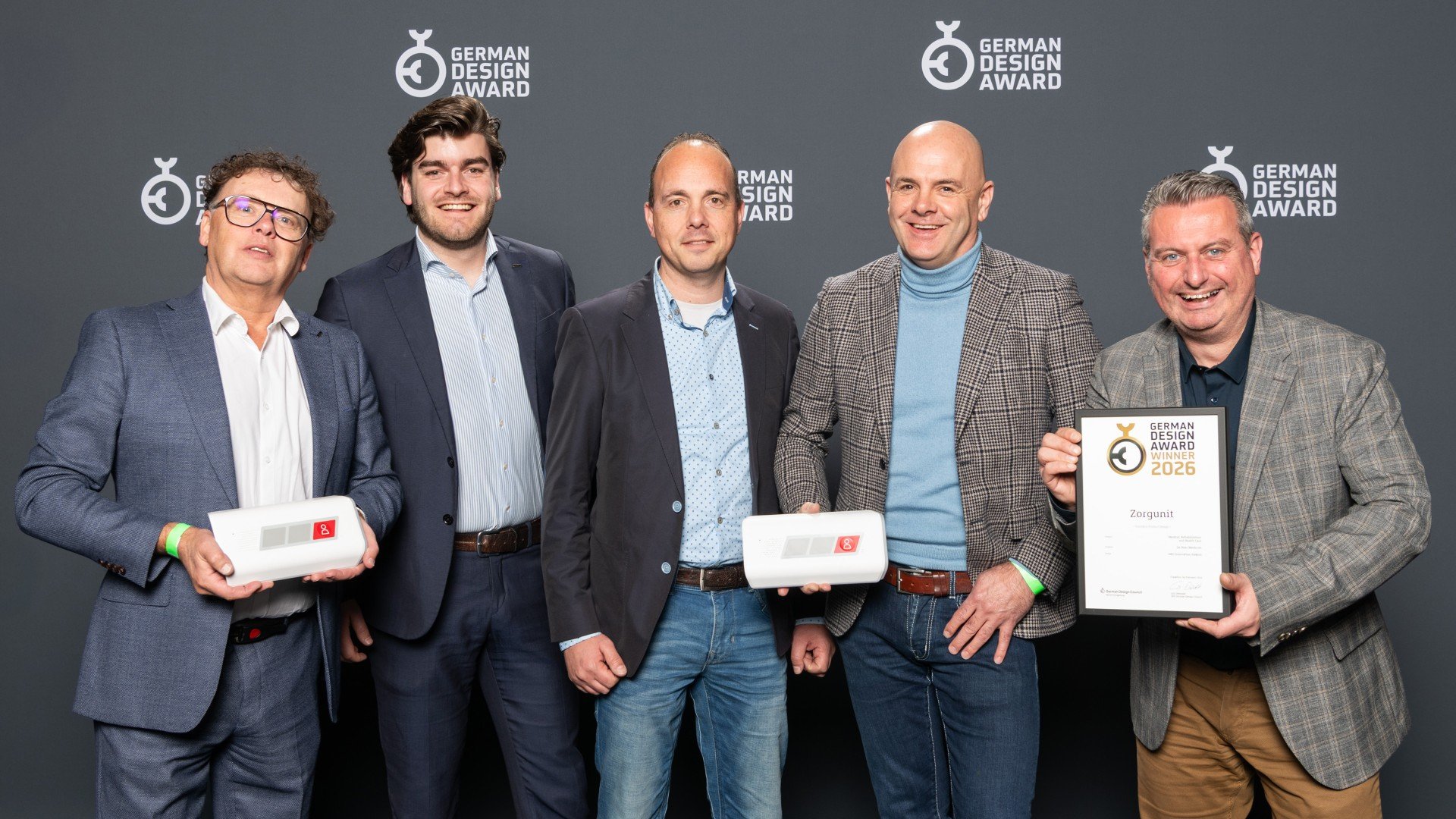
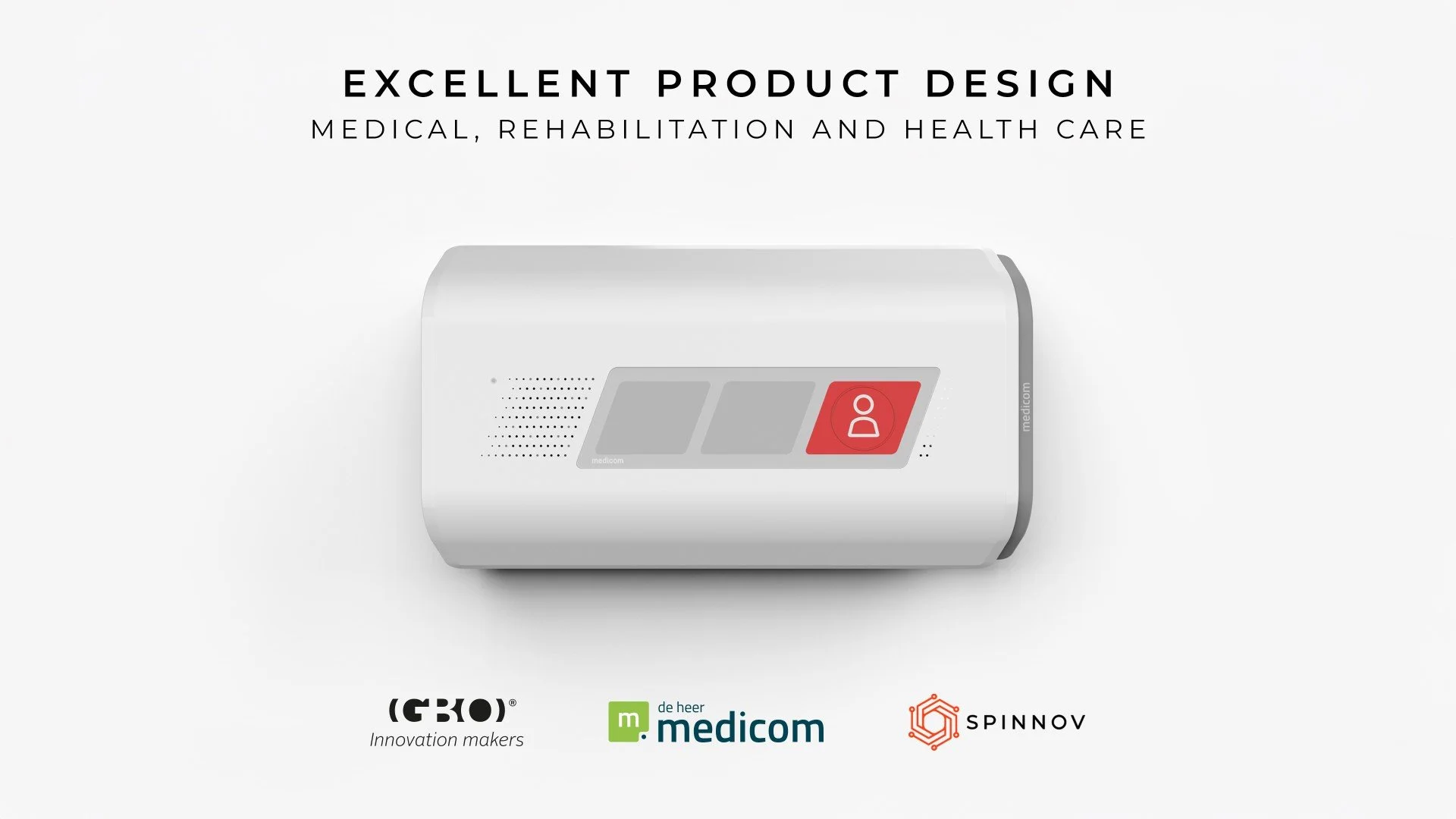
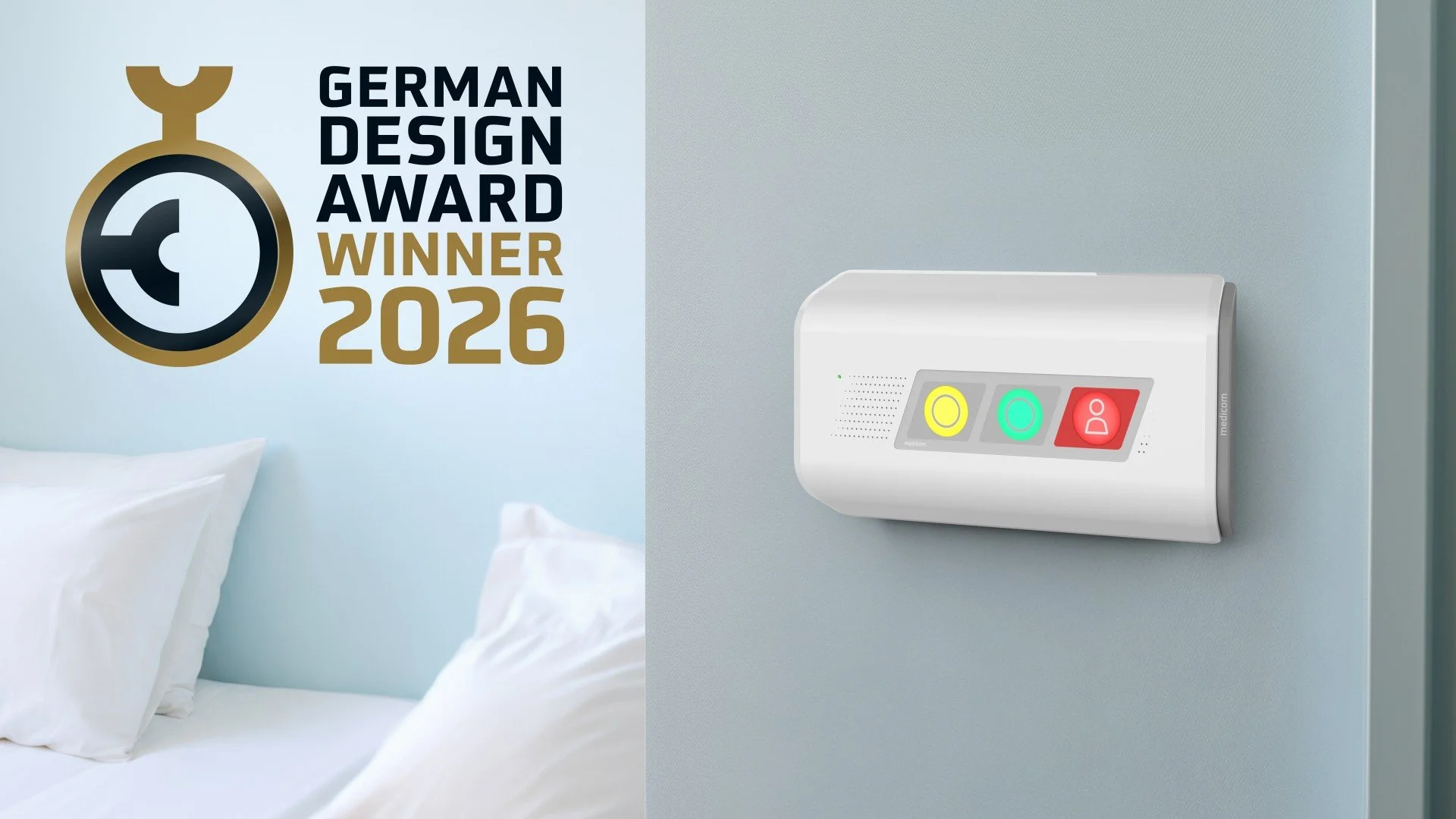
Award: German Design Award 2026 — Excellent Product Design, Medical & Healthcare category


When a patient presses a call button in a care facility, a lot has to go right in a very short time. The signal has to reach the right caregiver, clearly and instantly, whether it's 2pm or 2am, whether the device was installed last week or three years ago.
De Heer Medicom has been building communication and safety systems for healthcare environments for over 60 years. For their next generation of care intercom units, they needed a partner who could take the product from electronics concept to cloud-connected reality, without compromising on the reliability that care environments demand.

Client and Goals
De Heer Medicom has spent over 60 years building communication and safety systems for healthcare environments, elderly care, disability care, mental health, and hospitals. Their next generation of care intercom units needed to do more than communicate: they had to be cloud-connected, remotely manageable, and robust enough for continuous use in demanding care settings. SPINNOV was brought in to own the electronics, embedded software, audio system, and cloud-based device management.
Challenges
A care intercom sounds simple. In practice, it's anything but. The ZorgUnit and RoomBus units needed to support full-duplex audio, meaning both sides can speak and be heard simultaneously, the way a real conversation works. Achieving this without echo or feedback loops required extensive iteration on the audio processing stack; get it wrong and the system becomes unusable, which in a care environment means a patient can't call for help.
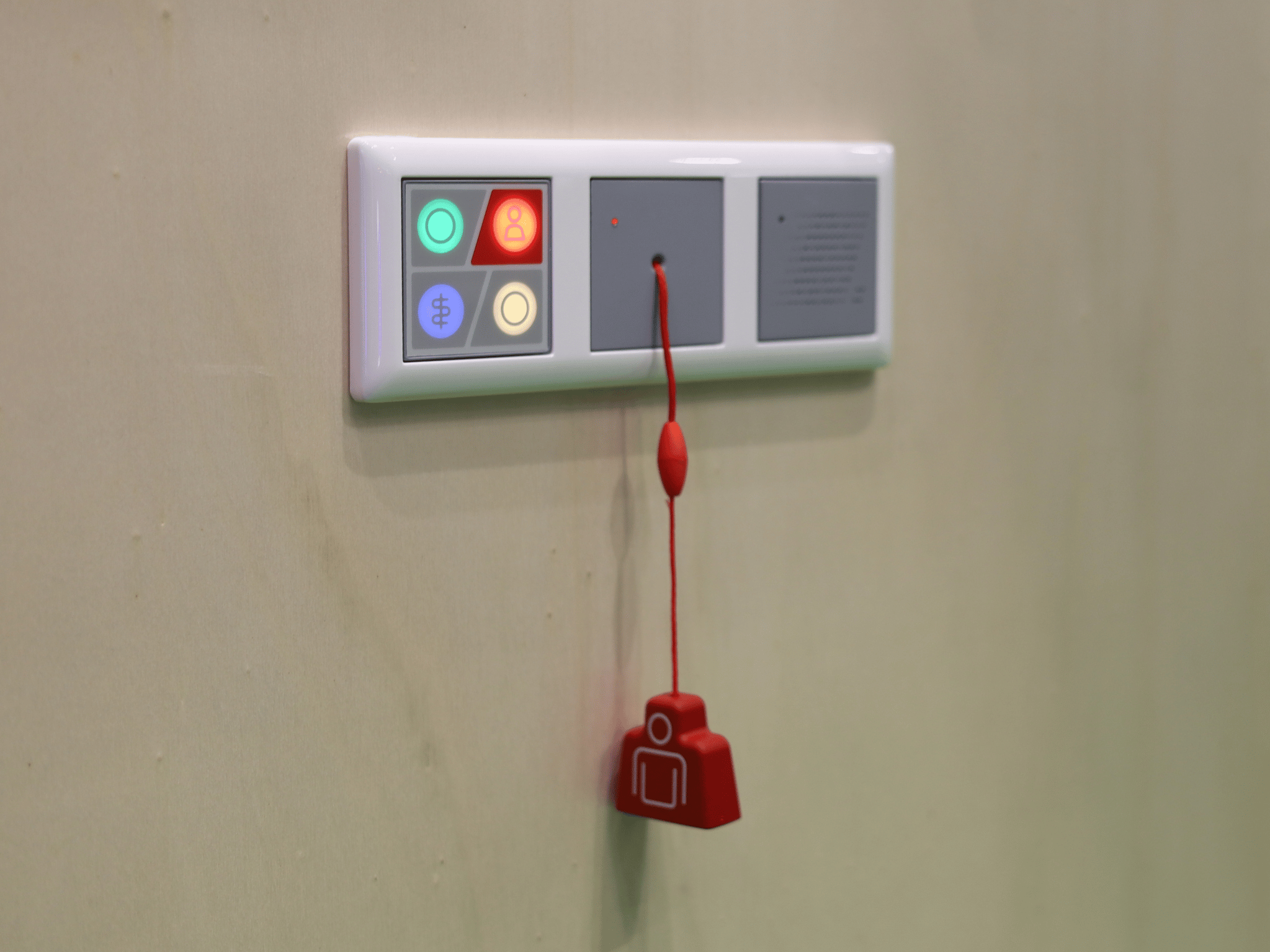
Beyond audio, the compact RoomBus units had to integrate physical notification mechanisms, pull cords, call buttons, reliably and within tight space constraints. The whole system needed to meet healthcare compliance standards, interoperate cleanly across units, and remain durable under the conditions of real care facilities. And because De Heer Medicom's clients manage large fleets of devices across multiple locations, remote management and over-the-air updates weren't a nice-to-have, they were a core requirement from day one.
SPINNOV’s Solution
Working with GBO on enclosure design and production, SPINNOV delivered the full electronics and software stack for the ZorgUnit and RoomBus product family. The result is a cloud-connected care intercom system that De Heer Medicom can deploy, monitor, and update remotely, and that went on to win the German Design Award 2026 for Excellent Product Design in the Medical, Rehabilitation, and Health Care category. Specifically, we:
Designed the custom PCBs for both the ZorgUnit and RoomBus units
Engineered a full-duplex audio system with echo cancellation and feedback suppression tuned for healthcare environments
Developed the embedded Linux-based firmware handling audio, connectivity, and device logic
Built the cloud backend enabling remote configuration, monitoring, and over-the-air firmware updates
Designed the front-end interface for device management
Integrated pull cord and call button inputs within the compact RoomBus form factor
Coordinated across engineering, production, and industrial design to deliver a coherent, standards-compliant product
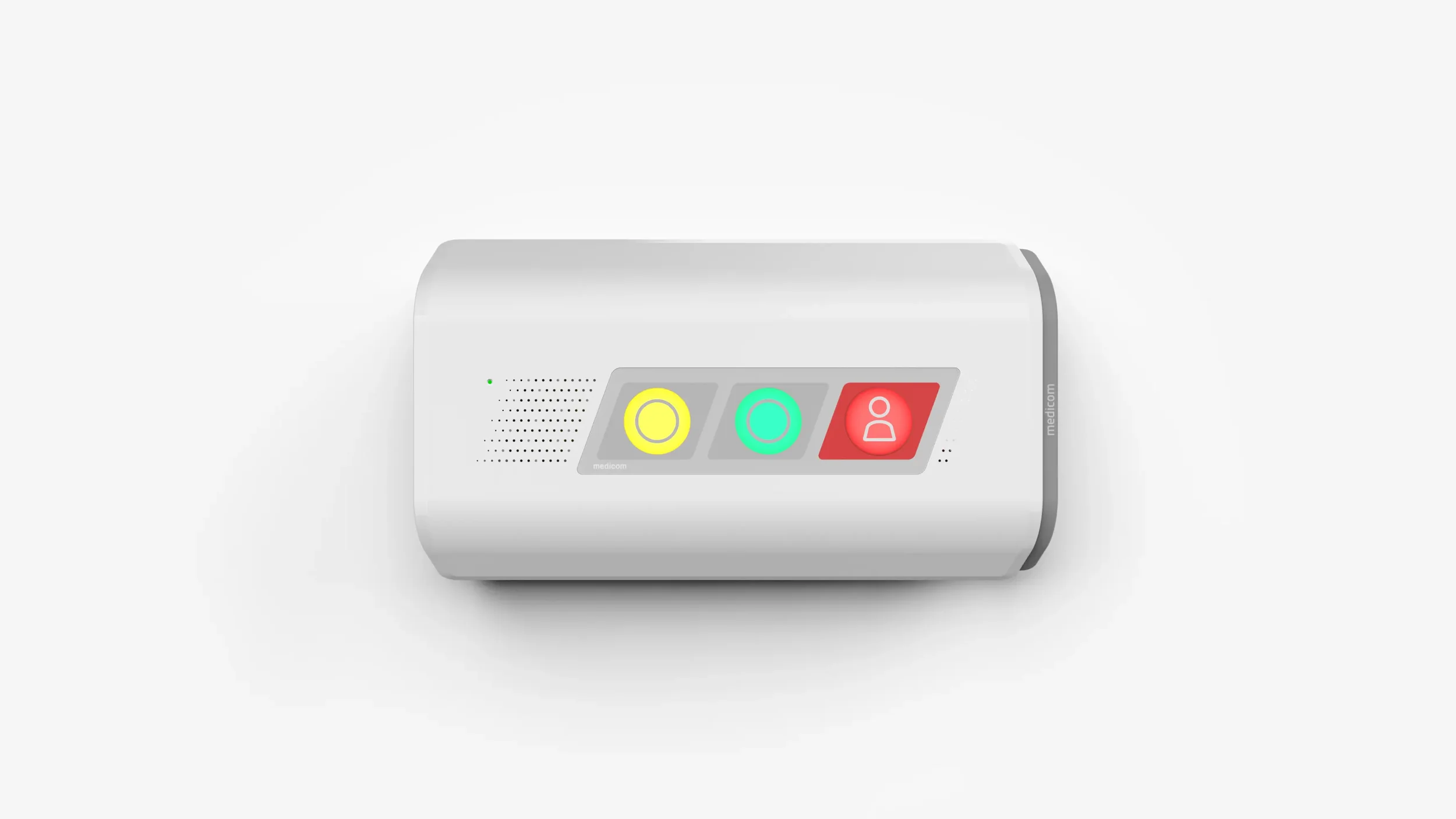
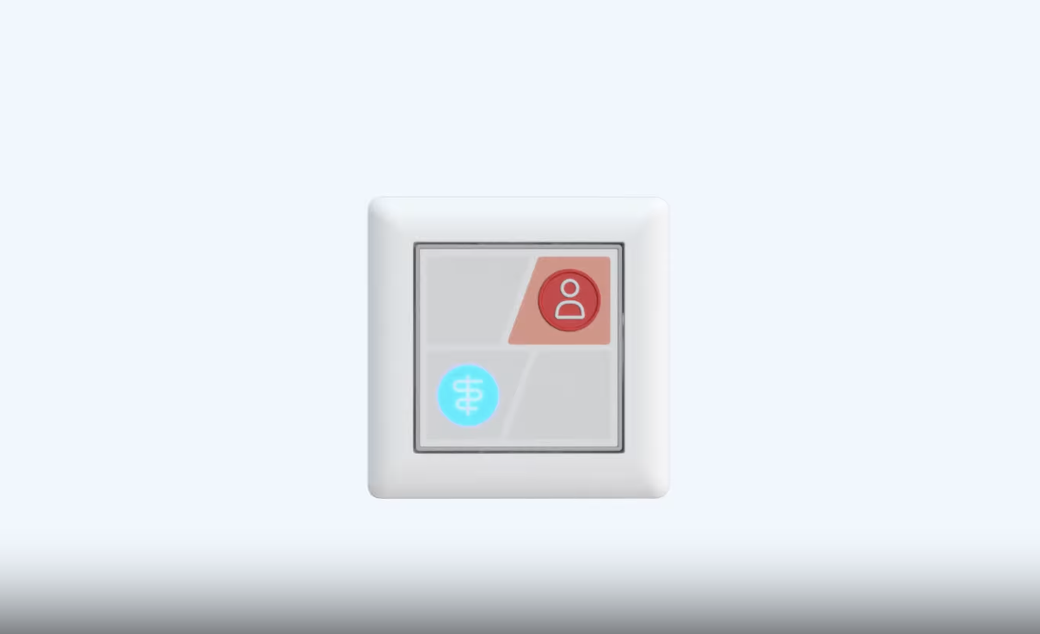
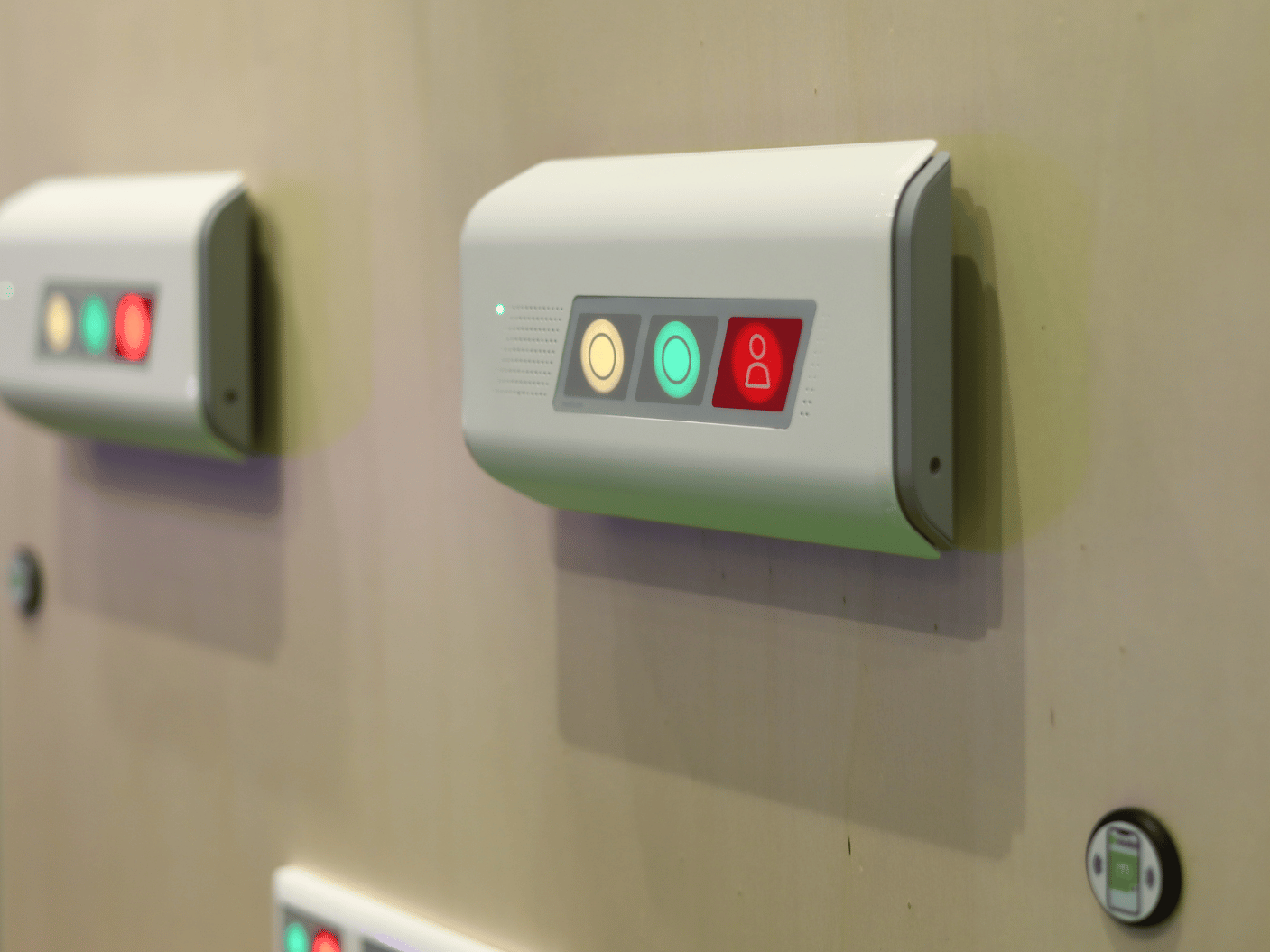
1 / Defining what "reliable" means in a care setting
The stakes of getting audio wrong
In most product categories, poor audio quality is an inconvenience. In a care intercom, it can mean a patient's call doesn't get through clearly, or at all. That framing shaped every decision we made on the audio subsystem.
Full-duplex intercom is technically harder than push-to-talk: the system has to continuously separate the incoming and outgoing audio streams, suppress acoustic echo from the speaker bleeding into the microphone, and handle the variable acoustics of different room types. We worked through multiple iterations of the audio processing pipeline, testing in conditions that matched real care environments before we were satisfied with the results.
2 / Electronics design and embedded software
Building the hardware backbone
The PCB design for the units had to balance functionality, physical size, and reliability under continuous operation. The ZorgUnit, as the main room-side device, carried the more complex electronics, audio processing, network connectivity, and the interfaces for peripheral devices. The RoomBus units were more constrained in size but needed to handle pull cord and button inputs dependably, since these are the primary way patients summon help.
Both ran on a Linux-based embedded platform, giving us a stable foundation for the firmware and a clear path to long-term software maintenance and updates. We designed the firmware to be updatable over the air via the cloud backend, critical for De Heer Medicom's ability to improve and maintain a fleet of deployed devices without sending engineers on-site.
3 / Cloud platform and remote management
Making a fleet of devices manageable from anywhere
De Heer Medicom's clients operate across multiple care facilities, often managing dozens or hundreds of units. The cloud backend we built gives them a single place to monitor device status, push configuration changes, and deploy firmware updates, without physical access to any individual unit.
We built the backend and front-end management interface to be straightforward for non-technical staff to use, while giving De Heer Medicom's own team the control they needed to support clients efficiently. The architecture was designed with scalability in mind, so the platform grows naturally as more units are deployed.
Award winner design
The ZorgUnit family is now deployed across care facilities in the Netherlands. Its recognition with the German Design Award 2026 for Excellent Product Design, in the Medical, Rehabilitation, and Health Care category, reflects what's possible when electronics engineering, software, and industrial design are developed as a single coherent system.
The award honors products that combine aesthetic excellence with functional innovation and a strong focus on user experience: exactly the brief we set out to meet from day one.