
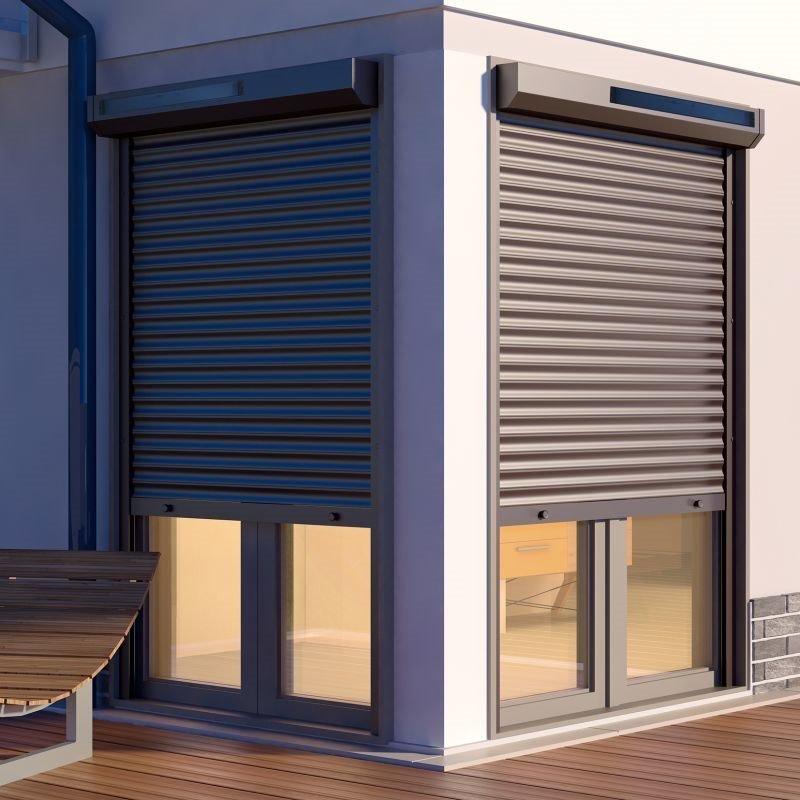
Bringing cellular IoT connectivity to a fully solar-powered roller shade motor
Client: Brel Home
Industry: Consumer Goods / Smart Home / Smart Industry
Service: Hardware Design, Embedded Software, Cloud IoT Platform
Client, Collaboration Partners: Brel Home, Vodafone

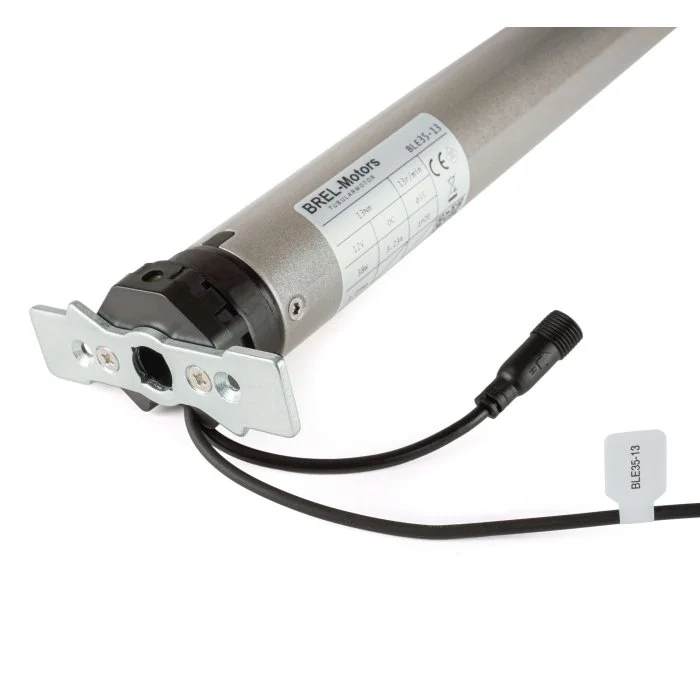
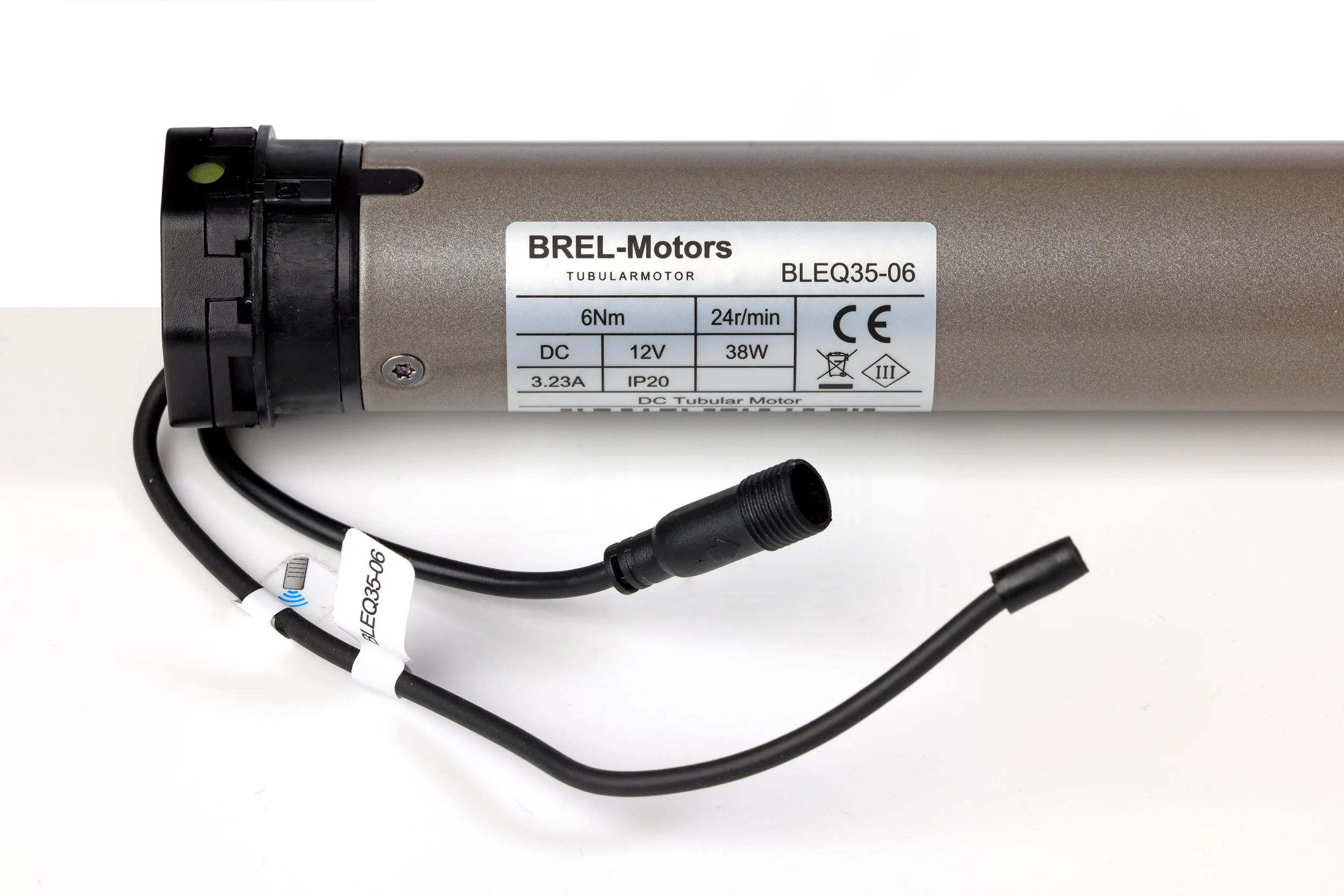
Together with Brel and Vodafone, we are introducing a new connectivity technology that goes beyond traditional Wi-Fi. By integrating NB-IoT SIM cards directly into the system, this fully solar-powered roller shade motor connects straight to the cloud, without relying on local Wi-Fi networks.
The result is reliable, secure communication that enables remote control, live status monitoring, and over-the-air firmware updates at scale, even in modern, highly insulated buildings where Wi-Fi signals struggle to reach.

Client and Goals
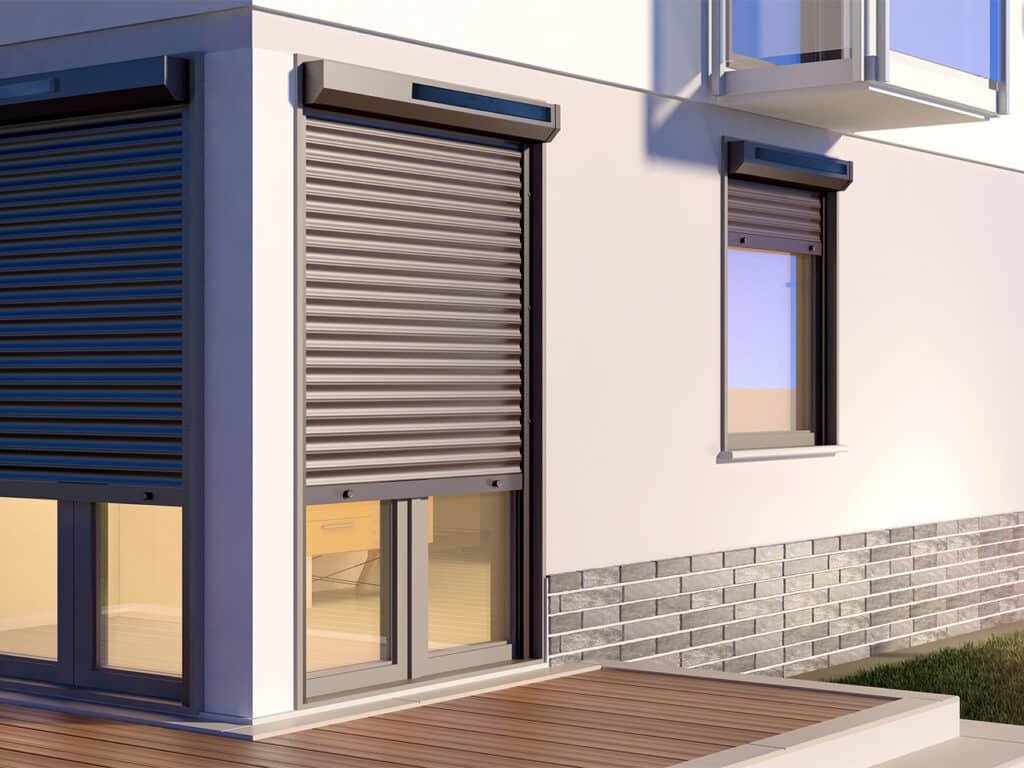
Brel Home is a Dutch specialist in automated sun-shading systems with a strong track record in solar-powered motors. Having already disrupted the market by eliminating mains wiring, their next step was connectivity, specifically, giving facility managers and installers the ability to control, schedule, and monitor large fleets of shades remotely, from a single cloud platform, with no local infrastructure. SPINNOV partnered with Brel and Vodafone to make that possible.
Challenges
Wi-Fi is the default assumption for smart building connectivity. It's also surprisingly unreliable for the exact use case Brel was targeting.
Modern commercial buildings, reinforced concrete, heavy insulation, triple-glazed windows, are engineered to keep energy in. That same construction blocks Wi-Fi signals before they reach a motor sitting in a window recess. The buildings that most need large-scale smart shading are often the ones where Wi-Fi coverage is patchiest and most expensive to fix. Adding access points, gateways, or local hubs just to connect a roller shade motor is the kind of complexity that kills adoption in the installer and facility management market.
At the same time, the motor runs entirely on solar power. Any connectivity solution had to work within a tight energy budget, waking to transmit data, receive commands, or download a firmware update, then returning to a low-power state without draining the battery. Reliability, range, and power efficiency all had to be solved together.
SPINNOV’s Role
Together with Brel and Vodafone, SPINNOV designed and integrated an NB-IoT connectivity solution directly into the solar motor, giving each unit its own SIM card and a direct, infrastructure-free connection to the cloud. The result is a roller shade motor that installs in minutes, connects immediately, and can be managed at scale from anywhere. Specifically, we:
Selected and integrated NB-IoT (Narrowband IoT) as the connectivity standard, chosen for its deep indoor penetration, low power draw, and nationwide cellular coverage
Designed the hardware around a Cortex-M platform with integrated SIM and antenna, optimised for the motor's solar power budget
Developed the embedded firmware managing connectivity, power states, motor control, and OTA update logic
Built and integrated the cloud IoT platform enabling remote control, status monitoring, scheduling, and over-the-air firmware updates at scale
Partnered with Vodafone to provide managed network infrastructure, eliminating the need for any local gateway or router configuration
1 / Choosing the right connectivity technology
Why NB-IoT, and why it matters
The decision to use NB-IoT rather than Wi-Fi, Zigbee, or Z-Wave wasn't arbitrary. NB-IoT operates on licensed cellular spectrum, the same infrastructure that carries mobile phone calls, which means it inherits decades of investment in coverage, reliability, and security. Crucially, it's designed specifically for devices that send small amounts of data infrequently, which maps precisely to what a roller shade motor needs: receive a command, report a status, download an update, then go back to sleep.
Its deep indoor penetration comes from operating at lower frequencies with higher link budgets than Wi-Fi, allowing signals to pass through the construction materials that defeat standard wireless protocols. For a product targeting large commercial buildings, this is the difference between a solution that works everywhere and one that requires case-by-case troubleshooting.
Working with Vodafone gave us access to managed SIM infrastructure and nationwide coverage without Brel needing to build or maintain any network of their own. Each motor comes with a SIM already embedded, it connects the moment it's powered up.
2 / Hardware and power management
Fitting cellular connectivity into a solar budget
Solar-powered devices live and die by their power management. A motor that drains its battery connecting to the cloud defeats the entire point of being wire-free. The hardware design had to treat energy as a first-class constraint alongside connectivity and motor control.
We designed the electronics around a Cortex-M microcontroller with the NB-IoT modem carefully duty-cycled, the radio wakes only when there's something to transmit or receive, spending the vast majority of its time in a deep sleep state. The solar charging circuitry and battery management system were tuned to ensure the connectivity subsystem never compromises the motor's ability to operate the shade, even during periods of low light.
Antenna placement and RF design received particular attention given the motor's installation position: typically recessed in a window cassette, surrounded by metal components, in a building that's already attenuating the signal. Getting reliable connectivity in that environment required careful PCB layout and antenna selection validated through real-world testing in representative installations.
3 / Cloud platform and remote management
Managing thousands of motors from a single dashboard
4 / Final deliverables
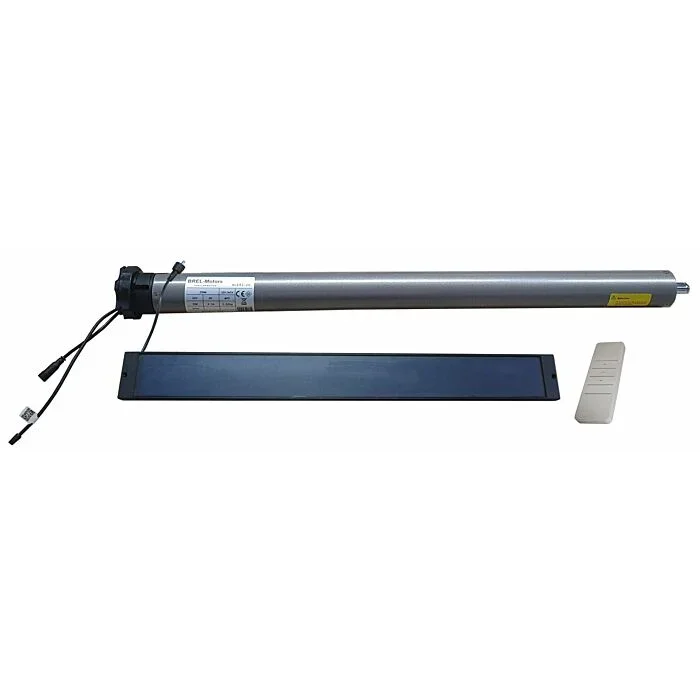
A connected motor ready for the smart building market
The cloud platform is what turns individual connected motors into a manageable fleet. Facility managers using Brel's system can group motors by zone, floor, or building; set automated schedules based on time or sun position; check the status of any individual unit; and push firmware updates to the entire fleet without visiting a single site.
The backend was architected to scale, handling the data volumes and concurrent connections that come with deployments of hundreds or thousands of units across multiple buildings, while keeping the interface straightforward enough for installers and facility managers who aren't IoT specialists. OTA updates in particular were designed with reliability at the forefront: an interrupted update rolls back cleanly, ensuring no motor is left in an unresponsive state in the field.
The Brel Solar Motor gives installers and facility managers something that didn't previously exist: a wire-free, infrastructure-free roller shade that connects reliably to the cloud in any building, at any scale, and stays connected without anyone having to manage a local network to keep it running.