

Designing the hardware system for a surgical training simulator that teaches EVH without touching a patient

Client: Getinge
Industry: MedTech / Medical Training
Service: Hardware Design, Electronic Engineering, System Integration
Client, Collaboration Partners: Getinge, Games For Health, Game Tailors
The result of more than 20 years of continuous advancement, Vasoview Hemopro 2 is the latest generation of Vasoview simultaneous cut-and-seal technology for Endoscopic Vessel Harvesting (EVH).
An embodiment of the Getinge commitment to highly refined technology and robust design, Vasoview Hemopro 2 virtually eliminates thermal spread and helps harvesters safely acquire high-quality conduits for coronary artery bypass graft (CABG) surgery.



Client and Goals
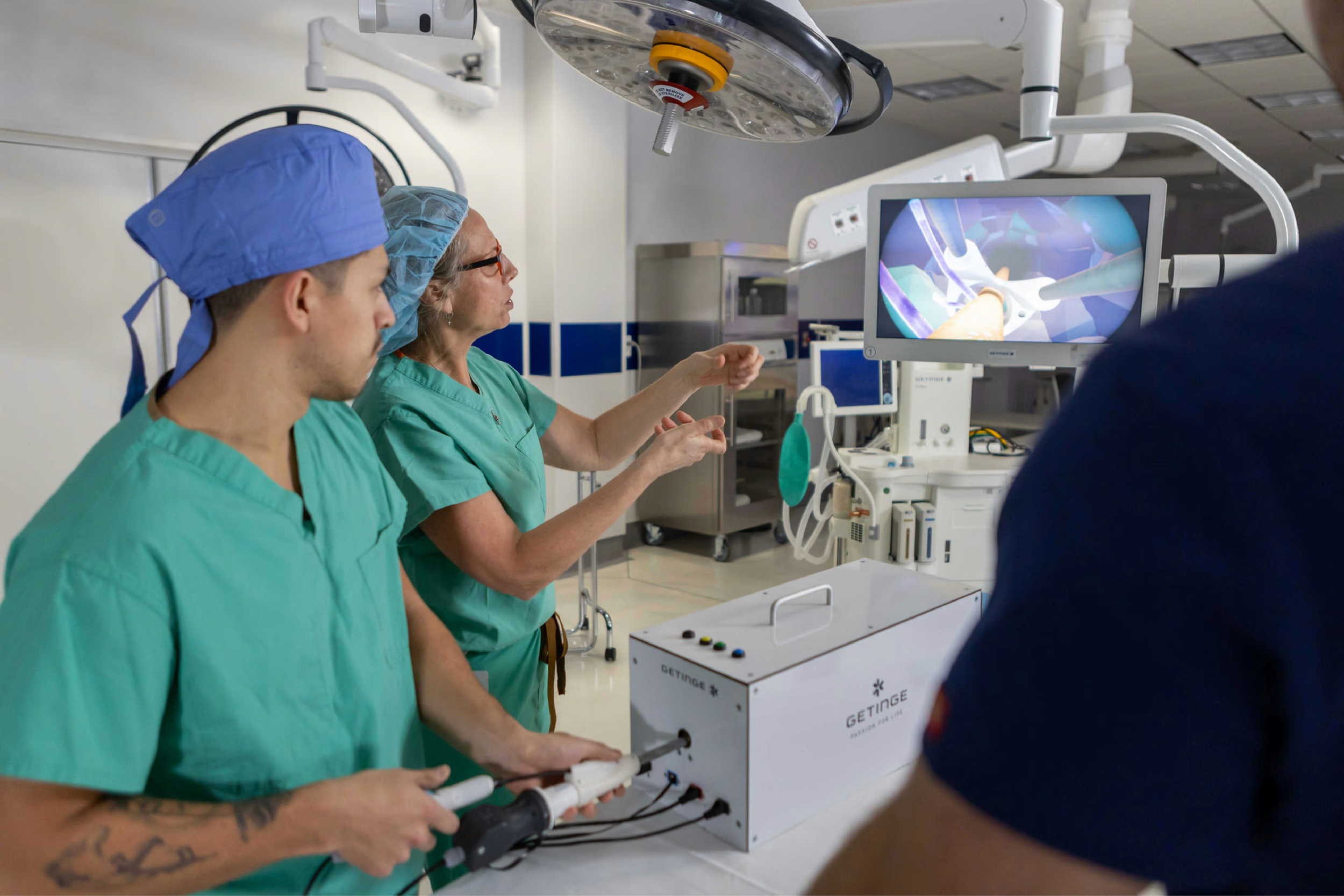
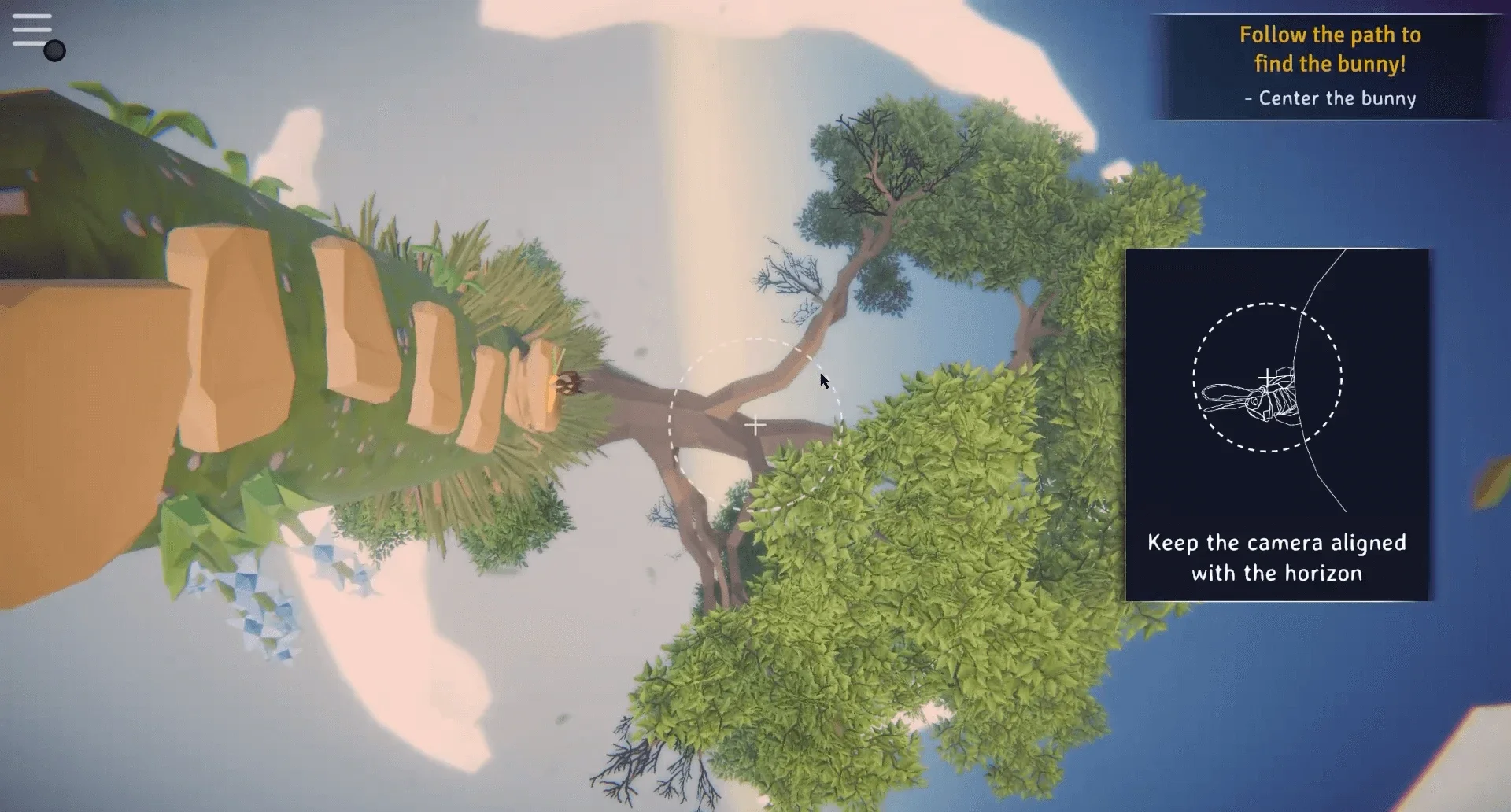
Getinge, a global leader in surgical workflows and acute care, partnered with Games For Health, Game Tailors, and SPINNOV to build a realistic video game simulator for Endoscopic Vessel Harvesting (EVH) training. The aim was to give surgical trainees a way to practice a high-stakes, technically demanding procedure in a risk-free environment, using the actual Vasoview controller they'd use in the operating room.
Challenges
EVH is a precise procedure. Surgeons harvest blood vessels from a patient's leg through a small incision, using an endoscopic system to cut and seal as they go, all while protecting vessel quality for use in coronary artery bypass graft (CABG) surgery. Getting it wrong has real consequences.
Translating that into a training simulator meant solving two problems at once. The hardware had to faithfully replicate the physical feel of the Vasoview Hemopro 2 instrument, including its sensors and haptic responses, so trainees built genuine muscle memory rather than just familiarity with a game. At the same time, the system had to communicate reliably with the game engine in real time, with no lag or signal noise that would break the sense of realism. All of this had to meet the standards expected of a medical-grade training tool used by professional surgeons.
SPINNOV’s Solution
Working alongside Getinge and Games For Health, SPINNOV delivered the complete hardware system underpinning the simulator. The result was an immersive, technically accurate training environment that trainees can use repeatedly, without any clinical risk. Specifically, we:
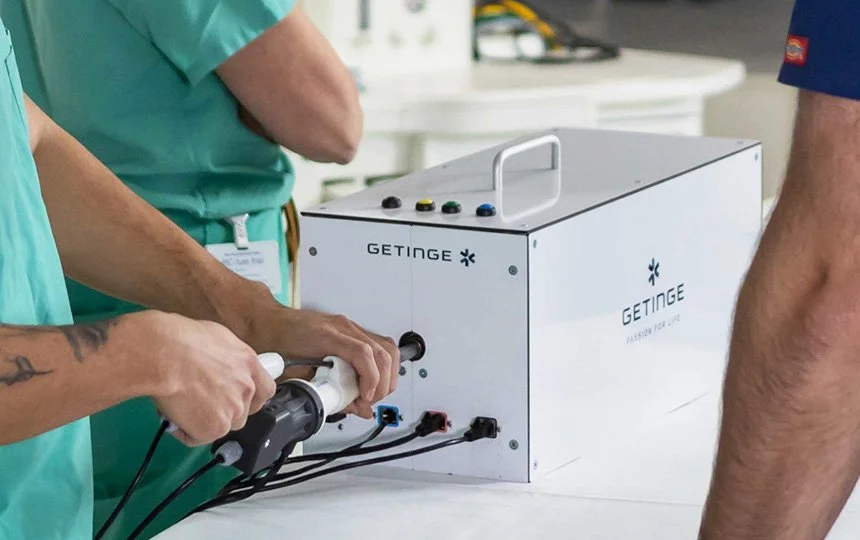
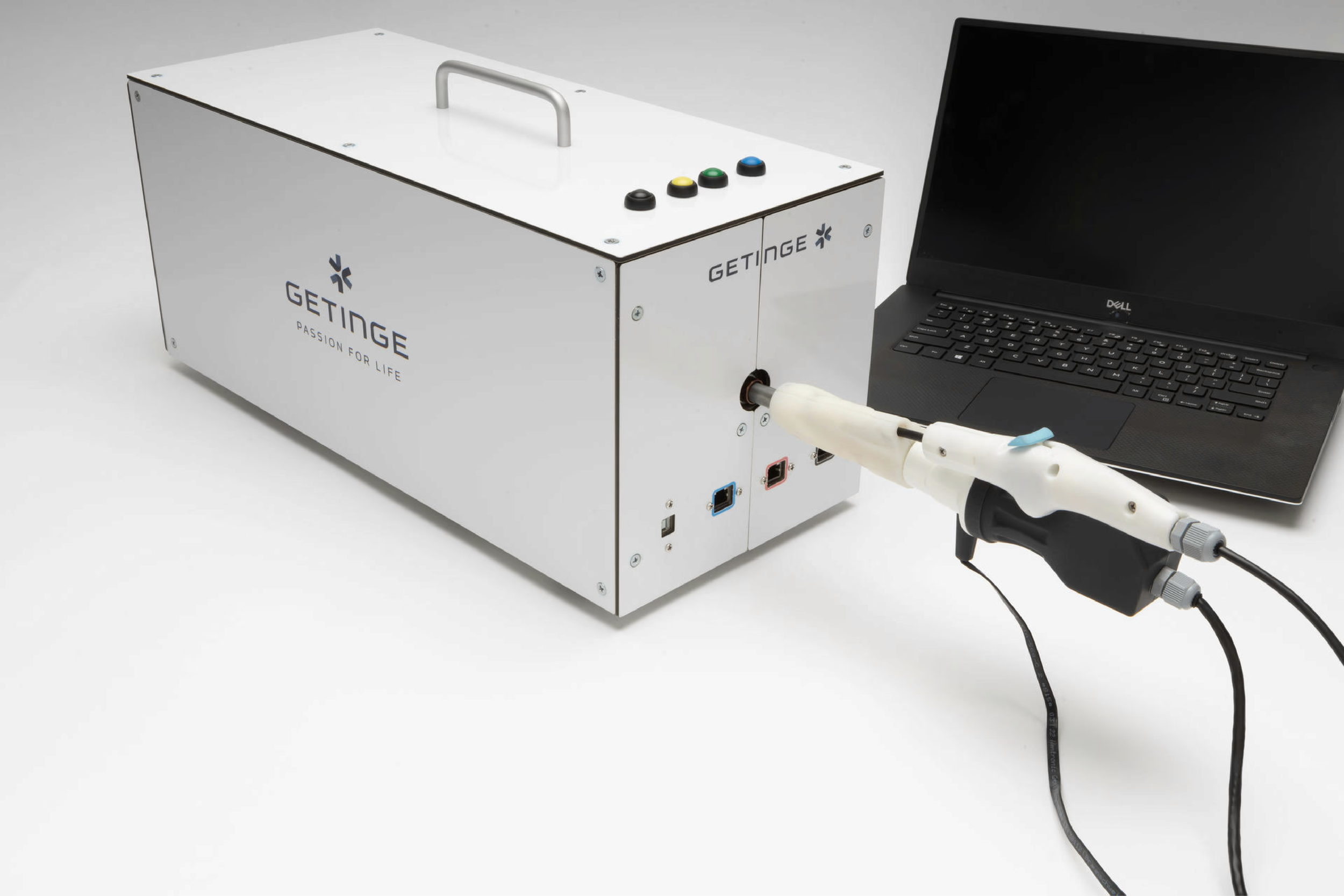
Designed and built the training console housing the electronics, connectivity, and power systems
Engineered a replica Vasoview controller with integrated sensors matching the real surgical instrument
Implemented haptic feedback calibrated to the physical behaviour of the actual Hemopro 2 system
Developed wireless communication (Wi-Fi and Bluetooth) for real-time data transfer between hardware and game engine
Built the system on a Linux / Raspberry Pi platform for flexibility and long-term maintainability
Managed full hardware-software integration across the three-party collaboration
1 / Understanding the surgical context
Starting from the procedure, not the technology
Before any hardware decisions were made, we needed to understand what EVH actually feels like to perform. The Vasoview Hemopro 2 is the product of more than 20 years of refinement, its simultaneous cut-and-seal mechanism, its ergonomics, the physical feedback it gives a harvester, all of that had to be represented faithfully in the simulator hardware.
2 / Hardware design and system integration
Building a console that feels like an operating room
The training console needed to do a lot invisibly. It had to manage power, handle wireless communication, process sensor data, and drive haptic actuators, all without adding latency that would degrade the simulator experience.
We chose a Raspberry Pi running Linux as the processing core, giving us a stable, well-supported platform with the I/O flexibility the design required. Sensor data from the controller was processed and streamed to the game engine over Wi-Fi and Bluetooth, with the communication stack tuned for the low-latency, high-reliability requirements of a real-time simulation.
The controller replica was designed to match the Hemopro 2 in form factor and feel, with embedded sensors at the key interaction points. Haptic feedback was calibrated iteratively to make sure the simulation gave trainees meaningful tactile information, not just a generic vibration response.
3 / Final deliverables
A training system ready for surgical education
At the end of the engagement, Getinge and Games For Health received:
A fully functional training console with integrated electronics, power management, and wireless connectivity
A replica Vasoview controller with embedded sensors and calibrated haptic feedback
Complete hardware documentation, schematics, firmware interfaces, integration specifications, and test procedures
System integration support to ensure the hardware communicated correctly with the Games For Health game engine throughout development
The simulator gives surgical trainees a way to build real skill with the Vasoview system before they're ever in an operating room, shortening the learning curve on a procedure where precision directly affects patient outcomes.
