
Not All IoT Is the Same: How NB-IoT Makes Brel's Solar-Powered Roller Shades Work
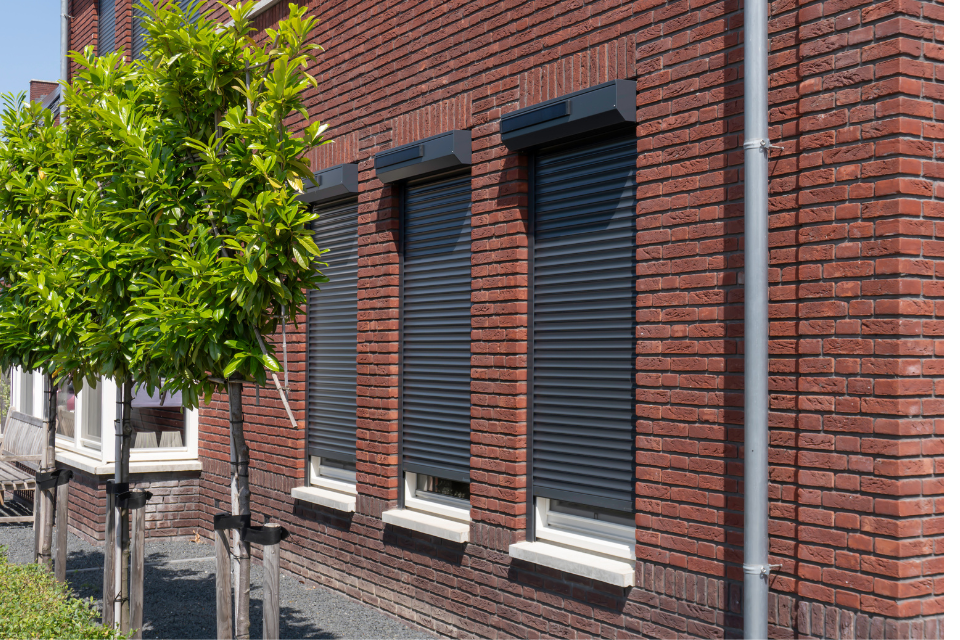
Brel Home's roller shade motor runs on solar power alone, has no mains connection, and is often installed inside a window recess, behind reinforced concrete, insulation, and triple glazing. It also needs to talk to the cloud, reliably, at scale, without draining its battery or requiring a technician to configure a local network.
That combination of constraints ruled out the connectivity technology most people assume "smart" devices use: Wi-Fi. SPINNOV, working with Brel and Vodafone, built the alternative into the motor itself.
Why Wi-Fi Wasn't the Answer
Wi-Fi and Bluetooth are optimized for high data throughput over short range. That's the right trade-off for streaming video or transferring files, and it's why these protocols dominate consumer electronics. But it's the wrong trade-off for a device that sends a status update once in a while and needs to run for years on a solar-charged battery.
There's also a physical problem. Modern commercial buildings are constructed to be energy-efficient: reinforced concrete, heavy insulation, triple-glazed windows. That same construction blocks Wi-Fi signals before they reach a motor sitting in a window cassette. The buildings that most need large-scale smart shading are often the ones where Wi-Fi coverage is patchiest, and adding access points or local gateways just to connect a roller shade motor is the kind of added complexity that discourages adoption among installers and facility managers.
NB-IoT: Built for the Opposite Use Case
NB-IoT (Narrowband IoT) is a cellular standard designed specifically for devices that transmit small amounts of data infrequently, rather than continuously. It runs on licensed mobile network spectrum, at lower frequencies than Wi-Fi, which gives it a higher link budget, meaning the signal can pass through construction materials that would otherwise block it.
That solves the range problem. It also solves the power problem: because the radio only wakes to transmit a status update or receive a command, then returns to a low-power sleep state, NB-IoT fits within the tight energy budget of a solar-charged battery, something continuous Wi-Fi connectivity couldn't sustain in this application.
The Missing Piece: A Live Network
A radio standard alone doesn't connect anything. NB-IoT still needs a carrier network to run on, which is where Vodafone comes in. Vodafone supplies the managed SIM infrastructure behind each motor, giving Brel access to nationwide coverage without having to build or maintain any network of their own. Each motor ships with a SIM already embedded and connects the moment it's powered up, with no local gateway or router required on site.
The Result
The combination, technology choice, power design, and network infrastructure, is what makes a wire-free, install-and-forget roller shade actually work at scale. Facility managers can group motors by zone or building, schedule shading automatically, check the real-time status of any individual unit, and push firmware updates across an entire fleet without visiting a single site.
It's a reminder that "IoT" isn't one technology. The right choice depends on what the device actually needs, and for a solar-powered motor hidden behind concrete and glass, that meant looking past Wi-Fi entirely.
🔗 Need a connectivity solution where standard approaches fall short?
We'd love to talk. 📩 info@spinnov.com
SPINNOV
SPINNOV is an end-to-end IoT and connected product engineering company based in Veldhoven, in the heart of the Dutch Brainport region. From sensor integration and embedded software to data platforms and algorithm development, SPINNOV brings the technical depth needed to turn complex real-world challenges into intelligent, working systems, across MedTech, AgriTech, SportsTech, and beyond.
For further questions, please contact:
Chris Heger
SPINNOV
Email: c.heger@spinnov.com